
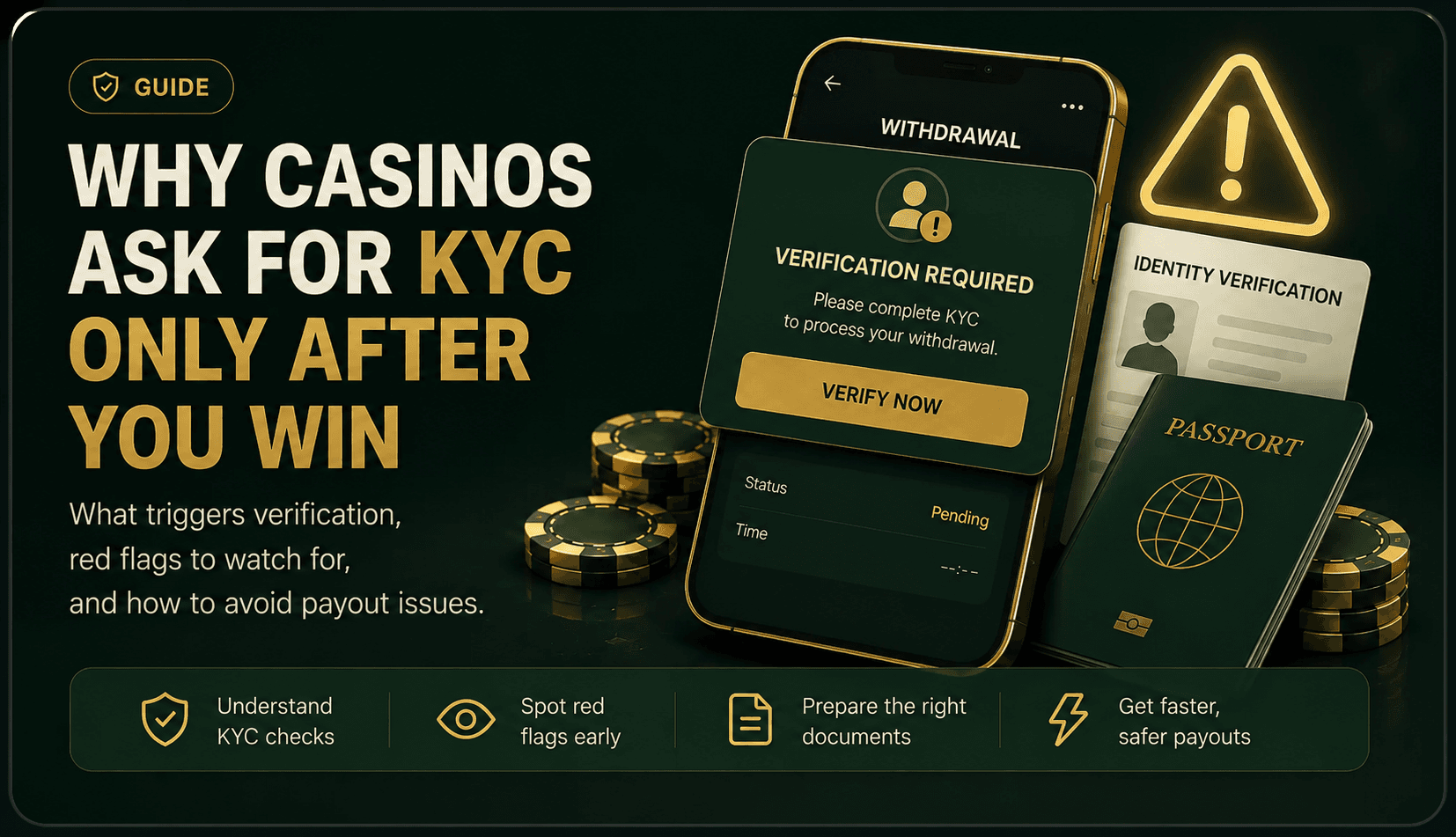
Why Casinos Ask for KYC After You Win
Registration takes a minute, a PayID or card deposit lands instantly, and nobody asks for a licence photo—until you win and request a withdrawal. Pending status appears, and suddenly the site wants ID, a selfie and sometimes proof of address. That timing frustrates players, but risk systems light up hardest when money leaves.
Why verification clusters around cashouts
Inbound deposits add funds to the platform. Outbound A$ withdrawals create fraud, bonus-abuse and AML exposure. Automated tools may score withdrawal size, betting pattern changes, device or IP shifts, bonus usage and linked accounts. A quiet losing week can sail through; a first large win can flag review.
- First-time withdrawals
- Rapid bankroll growth
- Heavy bonus play before cashout
- Login or payment inconsistencies
What “no KYC” usually means
Marketing that stresses instant signup rarely promises “we will never verify anyone.” Many sites delay checks until thresholds, suspicious activity or manual review. Terms almost always reserve the right to request documents anytime. Expectation gaps—not surprise laws—create most of the anger.
Friction after a win is not always malice
Busy support teams and genuine risk alerts cause real delays. Separately, some operators benefit if pending balances stay in play. Judge transparency: clear timelines and stable explanations beat vague “under review” loops.

How to reduce payout friction
Register with accurate details, use payment methods in your own name, avoid multi-accounting, read bonus max-bet rules, and consider a small test withdrawal before parking a large A$ balance on a new site. If stuck, document messages and ask for concrete status and timing rather than re-gambling pending funds.
KYC itself is normal compliance. The trust test is whether an Australian-facing casino explains verification before you deposit—not only after you win.