
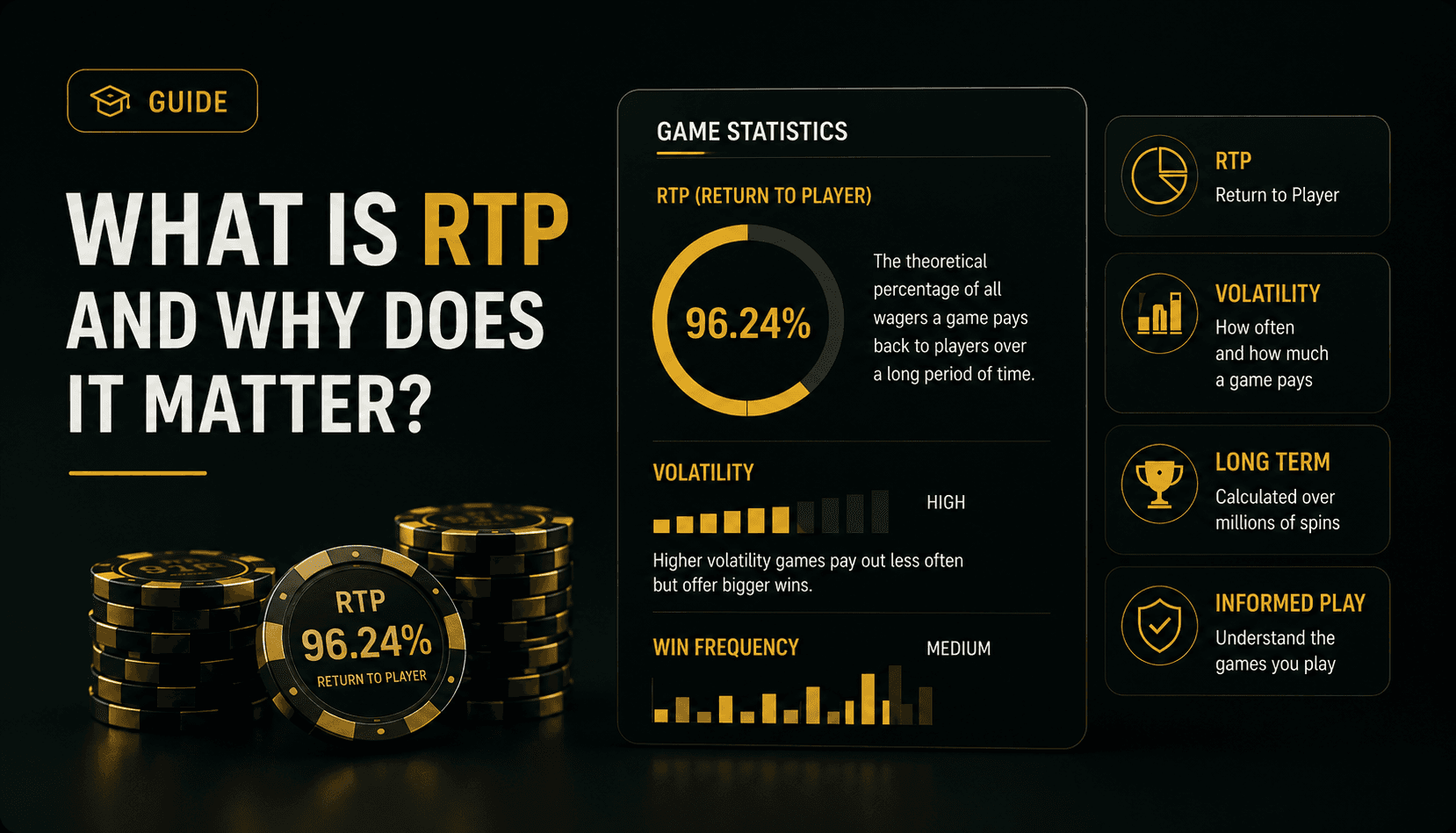
What Is RTP and Why Does It Matter?
Inside most game info screens sits a percentage labelled RTP. It is easy to ignore. Return to Player is one of the cleanest ways to understand how a title is built to pay back stakes over a vast sample—not how your next hour in A$ will finish.
What RTP means
RTP is the theoretical share of total wagers a game returns to players across a huge number of rounds. A 96% RTP pokie is designed so that, over the long model, about A$96 comes back for every A$100 wagered in aggregate. The remaining share is the mathematical house edge.
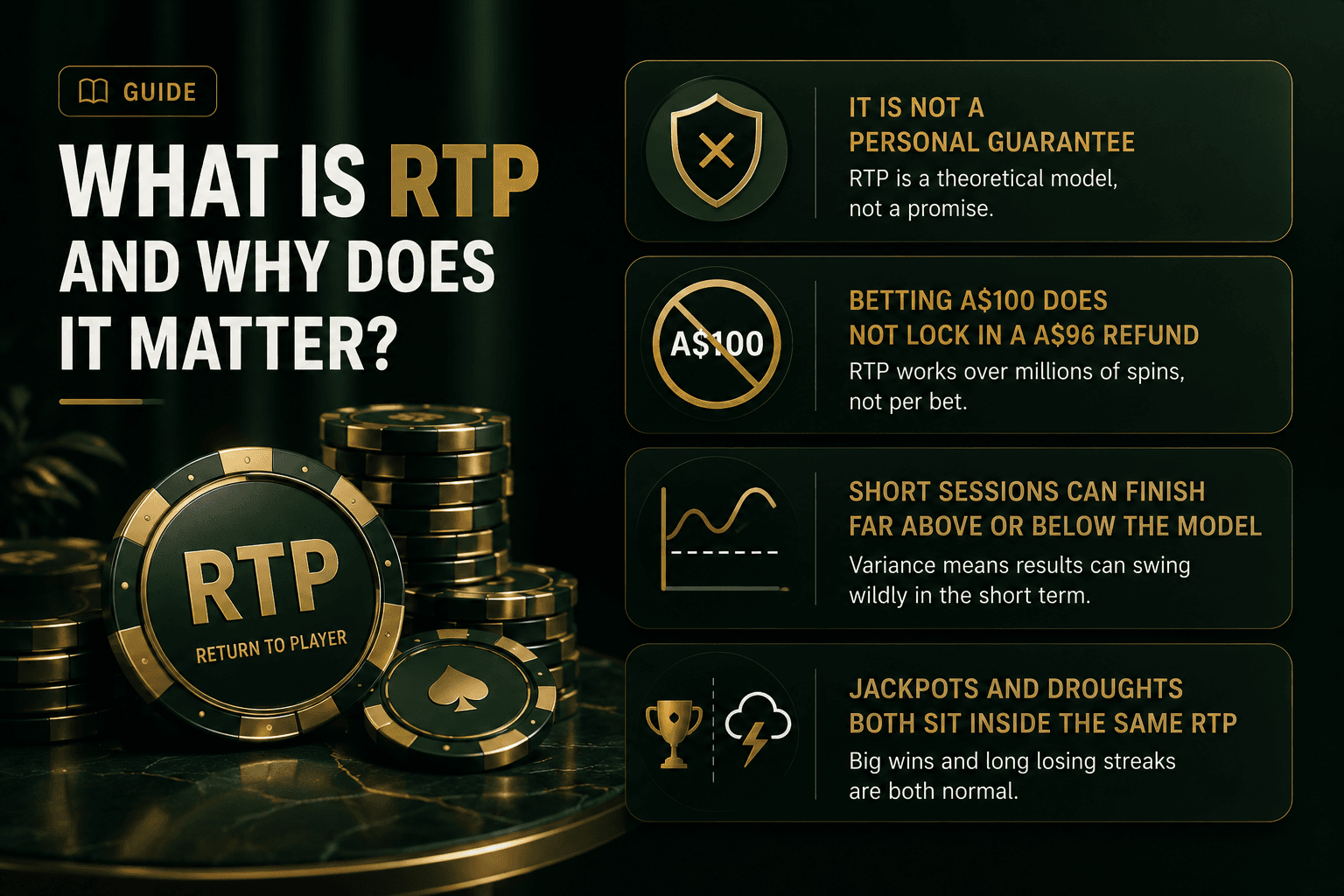
Individual results swing hard because RTP is an average over millions of outcomes, not a rebate on your night.
Is higher always better?
When games are otherwise similar, a higher RTP usually means a thinner house edge over time. Rough bands many players use: low-90s feels stingy, around 96% is common for modern online slots, and 97%+ is relatively player-friendly. Always pair the number with volatility and features.
RTP and volatility together
Identical RTPs can feel opposite. High volatility spaces returns into rarer, larger hits; low volatility spreads smaller pays more often. Choosing only on RTP misses half the design.
Where to find it
Open Help, Paytable, Rules or Game Info inside the title. Reputable studios publish the figure. If you cannot find RTP on a game you are about to fund, treat that as a caution flag.
RTP will not predict the next spin. It will help Australian players compare maths, avoid obviously weak returns, and understand why casinos keep a long-run edge.